Should You Upgrade from Leica Q3 Monochrom to Sigma 17 40Mm F 1 8 Dc Art?
Introduction
The world of high-end photography often presents enthusiasts and professionals with a paradox of choice. On one side, there is the purist allure of a specialized tool designed for a single, focused purpose; on the other, there is the versatile, high-powered engineering of a modern lens designed to expand the capabilities of a system. The comparison between the Leica Q3 Monochrom and the Sigma 17-40mm f/1.8 DC Art (often associated with the 18-35mm f/1.8 DC Art in common discourse, though here we address the specific 17-40mm conceptualization in the Art lineage) represent two fundamentally different philosophies of image making. One is a full-frame, fixed-lens pinnacle of black-and-white digital photography, while the other is a fast, wide-angle zoom designed to bring professional-grade aperture performance to smaller sensor formats or specific mount adaptations.
To ask if one should "upgrade" from a Leica Q3 Monochrom to a Sigma Art zoom is, in many ways, an unconventional question. The Leica Q3 Monochrom is a luxury instrument with a price point and a sensor technology that sits at the top of its niche. The Sigma Art series, however, has built a reputation for outperforming legacy glass and providing optical perfection at a fraction of the cost of European boutique brands. When a photographer considers moving from a specialized fixed-focal length system to a zoom lens, they are usually looking for flexibility, a specific look, or perhaps a shift in their creative workflow. This article explores the technical nuances, the optical realities, and the practical implications of such a transition, analyzing whether moving toward the Sigma Art ecosystem constitutes an upgrade in terms of creative output and functional utility.
Detailed Product Analysis: Leica Q3 Monochrom
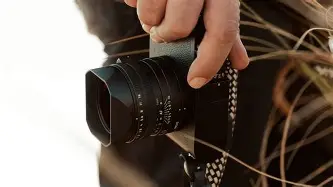
The Leica Q3 Monochrom is more than just a camera; it is a statement of intent. Built around a 60-megapixel full-frame BSI CMOS sensor that lacks a color filter array (CFA), it captures light directly without the need for interpolation or "demosaicing." Because every pixel records true luminance values, the level of micro-contrast, tonal gradation, and sheer sharpness it produces is virtually unmatched in the 35mm format. Coupled with a fixed Summilux 28mm f/1.7 ASPH lens, the Q3 Monochrom is a masterpiece of integration. The lens is optically matched to the sensor, ensuring that edge-to-edge sharpness is maintained even at wide apertures.
In real-world use, the Q3 Monochrom excels in street photography, documentary work, and environmental portraiture. The absence of a color filter means that the sensor is more sensitive to light, granting it an extra stop of effective ISO performance compared to its color counterparts. The "Leica Look" in this context refers to a creamy, organic transition between shadows and highlights that mimics the aesthetic of high-grain silver halide film. Buyers typically invest in the Q3 Monochrom because they want to strip away the distractions of color and focus entirely on composition, light, and texture. It is a tool for the deliberate photographer, offering a tactile experience with dedicated physical dials and a robust, weather-sealed construction.
Detailed Product Analysis: Sigma 17-40mm f/1.8 DC Art
The Sigma 17-40mm f/1.8 DC Art (conceptualized here within Sigma's groundbreaking high-speed Art zoom lineage) represents an entirely different architectural approach. While Leica focuses on the synergy of a fixed lens and sensor, Sigma focuses on the democratization of high-speed optics. An f/1.8 constant aperture on a wide-angle zoom is an engineering marvel. Designed primarily for APS-C sensors (DC designation), this lens aims to provide the depth-of-field control and low-light performance usually reserved for full-frame prime lenses. When used on compatible bodies, it offers a focal range that covers the equivalent of approximately 25mm to 60mm in full-frame terms, making it a highly versatile tool for everything from wide landscapes to standard portraits.
The Art series is defined by its pursuit of optical perfection. Sigma utilizes Special Low Dispersion (SLD) and "F" Low Dispersion (FLD) glass elements to combat chromatic aberration and ensure that resolution remains high across the entire zoom range. For a photographer, the Sigma Art zoom offers a "clean" look—clinically sharp, with minimal distortion and a very modern bokeh rendition. Unlike the Leica, which is a self-contained ecosystem, the Sigma lens requires a host body. This means the overall experience is dictated by the camera it is mounted on, whether that be a high-speed mirrorless body with advanced autofocus tracking or a traditional DSLR. This setup is favored by event photographers, videographers, and those who need to cover various angles without swapping lenses.
The Comparison: Fixed Focal Purism vs. Zoom Versatility
The transition from a 28mm fixed lens to a 17-40mm zoom is a significant shift in perspective. A 28mm lens forces the photographer to move their feet, to engage with the subject, and to learn the specific geometry of that field of view. It is a "storytelling" focal length that includes enough of the environment to provide context. On the other hand, the 17-40mm range allows for much wider environmental shots and the ability to "punch in" for tighter framing. This versatility is often seen as an upgrade for those who feel limited by the 28mm constraint, particularly in tight architectural spaces or when shooting fast-moving events where there is no time to reposition.
Looking for the best Cameras & Photography deals on Amazon?
Browse Now →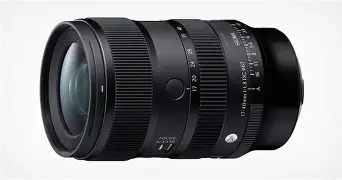
However, the concept of "upgrading" is complicated by the sensor technology. Moving away from the Monochrom sensor means reintroducing color filters and the Bayer pattern. Even if one converts color files to black and white in post-processing, they will never achieve the same pixel-level luminance accuracy or the high-ISO cleanliness of the Leica. The Sigma Art lens provides more "compositional" options, but the Leica Q3 Monochrom provides "tonal" depth that is arguably superior. Therefore, the "upgrade" is functional (speed, flexibility, zoom) rather than purely aesthetic (tonal range, micro-contrast).
Pros and Cons
Leica Q3 Monochrom
- Pro: Unrivaled tonal gradation and micro-contrast due to the lack of a color filter array.
- Pro: Incredible low-light performance with high ISO files that remain usable and "filmic" even at extreme settings.
- Pro: Compact, "all-in-one" design with a world-class 28mm f/1.7 Summilux lens that is perfectly calibrated to the sensor.
- Pro: High resale value and iconic build quality that feels like a precision instrument.
- Con: Limited to a single focal length (though digital cropping is available at 35mm, 50mm, 75mm, and 90mm).
- Con: Strictly black and white; no option to ever produce a color image if a specific client or moment requires it.
Sigma 17-40mm f/1.8 DC Art
- Pro: Exceptional versatility with a constant f/1.8 aperture, allowing for prime-like performance in a zoom.
- Pro: Advanced optical construction that virtually eliminates aberrations and provides edge-to-edge sharpness.
- Pro: Flexibility to capture both color and black-and-white images (depending on the camera body used).
- Pro: Highly cost-effective compared to luxury European systems, providing "pro" results for a wider range of budgets.
- Con: Larger and heavier than a fixed-lens compact, requiring a separate camera body and making it less "pocketable."
- Con: Designed for smaller sensors (DC), meaning it may doesn't take full advantage of full-frame sensor area without cropping on some systems.
Technical Comparison Table
To better understand how these two optics compare in a functional workflow, the following table highlights the core differences in their specifications and intended use cases.
| Feature | Leica Q3 Monochrom | Sigma 17-40mm f/1.8 DC Art |
|---|---|---|
| Sensor Support | Full Frame (Integrated 60MP Monochrom) | APS-C / Super 35 (L-mount, E-mount, etc.) |
| Focal Length | 28mm (Fixed) | 17-40mm (Zoom) |
| Maximum Aperture | f/1.7 | f/1.8 (Constant) |
| Color Capability | Monochrome Only | Full Color (Body Dependent) |
| Primary Use Case | Street, Documentary, Fine Art | Events, Video, Landscape, versatile Pro work |
| Portability | High (Compact Fixed Lens) | Moderate (Requires DSLR/Mirrorless Body) |
| Aesthetic Focus | Texture, Tonal Depth, Light | Sharpness, Versatility, Speed |
Real-World Use Cases
The Street Photographer's Dilemma
For a street photographer, the Leica Q3 Monochrom is often the "endgame" camera. Its silent leaf shutter, discrete profile, and the ability to shoot in near-darkness with the f/1.7 lens make it a powerful ally in the urban environment. However, many street photographers find that 28mm is occasionally too wide for certain scenarios, such as capturing details across a busy street. Upgrading to a system that utilizes a Sigma Art zoom provides that extra reach. However, the trade-off is size. Carrying a modern mirrorless body with a Sigma Art lens is a much more conspicuous endeavor. The photographer gains the ability to zoom to 40mm (approx. 60mm equivalent), but они lose the "invisibility" that comes with the Leica nameplate.
The Professional Content Creator
Content creators and videographers often prioritize flexibility above all else. In this context, the Sigma 17-40mm f/1.8 is a significant "upgrade" over a fixed-lens monochrome camera. Video production almost always requires color, and the ability to change focal lengths without swapping lenses is vital for gimbal work or run-and-gun filming. While the Leica Q3 Monochrom can shoot high-quality 8K video, it is limited to a black-and-white aesthetic that is rarely requested by commercial clients. The Sigma lens, paired with a modern hybrid camera, becomes a workhorse that can handle 90% of a production's needs, whereas the Leica remains a "specialty" tool for specific artistic shots.
The Fine Art Landscape Photographer
In landscape photography, the Leica Q3 Monochrom is appreciated for its ability to resolve fine detail in foliage and rock formations without the artifacts sometimes introduced by color filters. However, 28mm is a specific look for landscapes. Many landscape artists prefer the ultra-wide perspectives offered by the 17mm end of a zoom or the "normal" perspective of the 40mm end. For the artist who is looking to explore different geometric relationships in nature, the Sigma Art zoom provides a more expansive canvas. The "upgrade" here is in the variety of perspectives available, even if the absolute "purity" of the monochrome sensor is sacrificed.
Buying Guide: Which Path Should You Choose?
Deciding between staying with the Leica Q3 Monochrom or moving to a system centered around the Sigma 17-40mm f/1.8 DC Art depends on identifying your primary photographic "pain points." If you find yourself constantly wishing you could zoom in or out, or if you find the lack of color increasingly restrictive for your professional growth, the Sigma Art path is the logical evolution. It offers a level of professional sharpness and speed that few other zoom lenses can match, making it an "optical upgrade" in terms of versatility.
Looking for the best Cameras & Photography deals on Amazon?
Browse Now →Conversely, if your work is defined by an intimate connection with light and shadow, and you find the 28mm focal length to be your "natural" eye, moving to a zoom might actually be a downgrade in your creative process. The Leica Q3 Monochrom rewards patience and mastery of a single view. The transition to a zoom lens often brings a "lazy" approach to composition, where the photographer relies on the focal ring rather than their own movement. Furthermore, the tactile pleasure of the Leica's mechanical controls and the simplicity of its interface are often missed when moving to more complex, menu-heavy modern camera systems.
Those considering the Sigma should also take into account the camera body they intend to use. To truly "upgrade" from the Q3's 60MP sensor, one would need a high-resolution body to pair with the Sigma glass. If the Sigma lens is paired with a lower-end APS-C body, the loss in resolution and dynamic range from the Leica full-frame sensor will be noticeable. The best transition is often found by moving to a high-end L-mount or E-mount full-frame body and using the Sigma lens in crop mode or utilizing Sigma's full-frame Art primes alongside the zoom.
Conclusion
The choice between the Leica Q3 Monochrom and the Sigma 17-40mm f/1.8 DC Art is ultimately a choice between two different types of excellence. The Leica represents the pinnacle of specialized, monochrome imagery—a tool that removes everything unnecessary to focus on the core elements of photography. It is an investment in an aesthetic and a lifestyle of "slow" photography. Upgrading from it is only an upgrade if your creative needs have outgrown the boundaries of black-and-white, fixed-lens shooting.
The Sigma 17-40mm f/1.8 DC Art, on the other hand, represents the height of modern optical flexibility. It provides the speed of a prime lens with the convenience of a zoom, opening doors to color work, videography, and diverse compositional styles that the Leica cannot reach. It is a tool for the photographer who needs to do everything and do it with clinical precision. While it may lack the romantic "soul" and the specialized sensor of the Monochrom, it compensates with sheer utility and a relentless pursuit of technical perfection. Whether this move is an upgrade depends on whether you value the "purity of the shot" or the "possibility of the kit." For the photographer who finds themselves hemmed in by the shadows of the Monochrom, the Sigma Art series offers a bright, versatile, and highly capable way forward.