Keychron C1 Pro 8K Specs, Features, and Value: Is it worth the price tag?
The Keychron C1 Pro 8K arrives as a refresh of Keychron's popular compact tenkeyless line, pitched toward both serious typists and competitive gamers who want a no-nonsense wired board with up-to-date responsiveness. This article reviews the C1 Pro 8K in depth, examines who it is for, breaks down its strengths and weaknesses, compares it to close alternatives, and provides a practical buying guide that helps readers decide whether the price matches the real-world value it delivers.
Introduction: Where the C1 Pro 8K fits in the market
Keychron built its reputation on delivering approachable mechanical keyboards that bridge productivity and casual gaming. The C1 Pro 8K is Keychron's response to an audience that increasingly expects higher polling rates, modern wiring standards, and the option for refined typing feel without premium boutique pricing. By emphasizing an “8K” polling rate in its name, the product targets users who prioritize low input latency, but the purchase decision ultimately depends on more than a single spec. The review below looks beyond marketing to assess ergonomics, build, customization, and everyday suitability.
Key specs and feature summary
- Layout: Tenkeyless (87-key) — compact for desk space while retaining full arrow cluster and navigation keys.
- Connection: Wired USB-C (stable, low-latency connection presumed).
- Polling rate: Branded as “8K” — marketing shorthand for an up-to-8000 Hz or otherwise higher-than-standard polling configuration intended to reduce input latency for competitive use.
- Switch options: Available with multiple mechanical switch types (linear, tactile, clicky) depending on SKU; some Pro SKUs include hot-swappable sockets.
- Keycaps: Typically comes with OEM-profile keycaps; material and finish can vary by variant and region (confirm whether PBT or ABS for the specific model).
- Build: Mix of metal and plastic in many configurations — often an aluminum top or reinforced plate with a plastic case to balance cost and weight.
- Software/firmware: Likely supports basic onboard remapping and may offer compatibility with community tools such as VIA or QMK on certain Pro/firmware-updatable SKUs.
- Target users: Office typists who want tactile reliability, gamers who seek low latency, and hybrid users who value a compact layout.
Detailed review and analysis
Design and build quality
Keychron typically leans toward a clean, functional aesthetic, and the C1 Pro 8K continues that tradition. The tenkeyless footprint makes it attractive for users with limited desk depth or who prefer mouse workspace to numeric pad real estate. Build quality will depend on the specific configuration: premium variants commonly include an aluminum top plate that improves rigidity and reduces flex under typing pressure, while value-focused SKUs use a reinforced plastic housing.
For everyday use, the C1 Pro 8K should feel solid under the hands. The inclusion of metal in the construction (where present) provides a satisfying heft and acoustic damping compared with all-plastic alternatives. The keyboard's low profile and straightforward key labeling aim for universal appeal rather than niche styling.
Switches and typing experience
Keychron's product family generally offers several switch choices—linear (smooth), tactile (bump), and clicky (audible). The Pro-level models sometimes provide hot-swappable switch sockets so users can experiment with different mechanical switches without soldering. Typing feel is therefore highly dependent on the chosen switch and keycap material; for example, PBT keycaps and a gasket-mounted design would typically yield a deeper, more muted sound and softer bottom-out feel compared with ABS and a rigid plate.
For productivity users, a tactile switch and PBT keycaps normally provide the best balance of comfort and feedback. Gamers who favor rapid actuation may prefer linear or optical options. The C1 Pro 8K's actual character—sound profile, travel, and actuation crispness—will come down to those choices and any optional foam or dampening the user adds.
Performance and latency
The most prominent claim in the product name is “8K,” which signals an emphasis on input responsiveness. Higher polling rates reduce the time between keyboard events and the host OS registering them, which matters most in fast-paced competitive gaming. For everyday productivity, any modern wired mechanical keyboard (with a standard 1000 Hz polling rate) is already more than adequate. The practical difference between 1K and 8K is measurable but subtle for non-competitive users.
That said, if the C1 Pro 8K implements the higher polling rate effectively—stable drivers, clean USB implementation, and proper firmware—competitive players who chase every millisecond could find value in that claim. It is important to note that actual benefits depend on the host system, USB controller, and software stack; users should verify testing reviews focused on latency if this is the decisive criterion.
Find top-rated Laptops & Computers products at great prices.
Shop Amazon →Connectivity and convenience
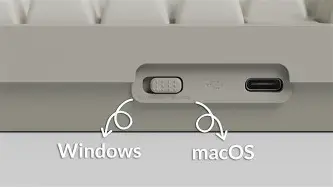
A wired USB-C connection remains the most reliable for low-latency input and avoids battery management considerations. For users who regularly switch between devices, a wired-only approach can be limiting, but it’s also simpler and typically more stable. Onboard memory for macros and profiles (if present) increases convenience for multi-system setups since profiles can travel with the keyboard regardless of the host.
Customization and software
Keychron has embraced firmware customization in past models, with some units supporting QMK or VIA. The Pro designation often indicates more advanced firmware capability, enabling remapping, macro programming, and layered profiles. For enthusiasts who like to tweak key behavior or program multi-layer layouts, this flexibility is valuable. If full QMK compatibility is essential to the buyer, confirmation of onboard firmware support for that specific C1 Pro 8K SKU is recommended.
Acoustics and ergonomics
Acoustics depend heavily on switch type, case material, and internal dampening. Users sensitive to noise should opt for tactile switches with PBT keycaps and, if possible, additional foam dampening. Ergonomically, the tenkeyless layout reduces lateral reach for the mouse and maintains a comfortable posture; however, those who need a number pad frequently should consider full-size options or add a separate numeric keypad.
Real-world use cases: who benefits most?
- Competitive gamers: Players who prioritize micro-optimization of input lag and prefer wired setups may appreciate the 8K polling emphasis.
- Hybrid workers: Developers, writers, and remote workers who want a compact, rugged keyboard for long typing sessions will find the C1 Pro 8K’s tenkeyless layout practical.
- Keyboard tinkerers: Enthusiasts who like to swap switches, remap keys, or flash custom firmware benefit when the Pro SKU supports hot-swap and QMK/VIA.
- Budget-minded buyers who want modern features: Those seeking many high-end features without boutique pricing might be drawn to the C1 Pro 8K’s value proposition if it undercuts premium custom keyboards.
Typical buyer concerns—durability, typing noise, software support, and compatibility with OSes—are all factors that should be investigated on a SKU-by-SKU basis since Keychron frequently offers multiple variants.
Pros & Cons
- Pros
- Strong value proposition for an 8K-branded compact mechanical keyboard.
- Tenkeyless layout saves desk space and improves mouse ergonomics.
- Wired USB-C provides reliable, low-latency connectivity.
- Pro-level firmware and hot-swap options increase customization potential.
- Solid build options (aluminum top/plate on higher SKUs) give premium feel without boutique pricing.
- Cons
- 8K polling rate offers diminishing returns for most non-competitive users.
- Variants and region-specific SKUs make exact spec comparison confusing; buyers must verify details.
- Wired-only design (if present) removes the convenience of Bluetooth multi-host switching found in some Keychron lines.
- Acoustic profile and comfort depend heavily on switch/keycap choice; stock configuration may not suit everyone.
Comparison table: Keychron C1 Pro 8K vs. similar options
| Feature | Keychron C1 Pro 8K | Keychron C1 (Standard) | Typical 8K Gaming TKL (Generic) |
|---|---|---|---|
| Layout | Tenkeyless (87-key) | Tenkeyless (87-key) | Tenkeyless (87-key) |
| Connection | Wired USB-C | Wired USB-C | Wired USB-C (sometimes wireless variants) |
| Polling Rate | Marketed as 8K (high polling rate) | Typically 1000 Hz | Often 8K or 1000 Hz depending on model |
| Hot-Swap | Available on select Pro SKUs | Usually non-hot-swap (varies) | Common in enthusiast models |
| Switch Options | Multiple mechanical/optical options | Multiple mechanical options | Multiple mechanical/optical options |
| Keycaps | Varies by SKU (confirm PBT vs ABS) | Often ABS or mixed | Usually PBT on higher-end models |
| Firmware | Pro-level: likely VIA/QMK support on some SKUs | Basic onboard functions | Varies; many support QMK/VIA |
| Price Range | Mid-range (value-focused Pro) | Lower-mid-range | Wide range: mid to high |
Buying guide: what to check before purchasing
1. Confirm the exact SKU and specs
Keychron frequently offers multiple variants with subtle differences: aluminum vs. plastic top, PBT vs. ABS keycaps, hot-swap vs. soldered switches, and firmware support. Buyers should verify the precise SKU to ensure it includes the features they need.
2. Decide whether high polling rate matters
If the primary use is productivity—writing, coding, spreadsheet work—an 8K polling rate is overkill. Competitive players who use high-frame-rate displays and tune their input stack may notice minor advantages. Consider the overall system and whether the operating environment will actually benefit from the higher polling rate.
3. Choose switches deliberately
Switch type shapes the entire typing experience. Tactile switches are comfortable for long typing sessions and help reduce accidental double-press, while linear switches are favored for smooth, rapid keypresses. If the model is hot-swappable, buyers gain flexibility to try multiple switch types over time.
4. Check firmware and customization options
For users who remap keys, program macros, or build layered layouts, confirm whether the keyboard supports QMK or VIA. Onboard profile memory is a plus for switching between systems.
Shop the latest Laptops & Computers picks on Amazon.
View Offers →5. Evaluate acoustics and ergonomics
Think about noise tolerance in shared spaces. If sound matters, look for PBT keycaps, choice of quieter switches, and whether the case/plate arrangement lends itself to additional dampening mods if desired.
6. Consider long-term value
Warranty, spare parts availability (replacement keycaps, stabilizers, or PCBs), and community support (firmware, custom keycap sets) contribute to long-term satisfaction. Keychron typically has decent community backing and aftermarket compatibility, which increases the keyboard’s lifespan and resale value.
Final verdict: is the Keychron C1 Pro 8K worth it?
The Keychron C1 Pro 8K is positioned to appeal to a broad audience: gamers who want one of the lowest-latency wired options without stepping into boutique pricing, and power users who want a competent, compact typing instrument with modern conveniences. Its value depends heavily on the chosen SKU and the buyer’s priorities.
For a competitive gamer with a high-refresh display and an interest in shaving off every bit of input lag, the C1 Pro 8K's marketed polling performance could be a meaningful advantage. For typists and professionals, the keyboard’s real value will come from build quality, switch choice, and firmware flexibility rather than the polling rate alone.
Before buying, prospective owners should verify the exact configuration (hot-swap, keycap material, and firmware support) and consider whether the higher polling rate justifies the premium over a standard 1K keyboard. When the chosen SKU aligns with a user’s needs—stable wired performance, hot-swap and firmware support, and a robust build—the C1 Pro 8K is a compelling mid-range option that balances modern performance with practical features.
Ultimately, it is worth the price for those who either need the marginal latency gains for competitive play, or who value the specific Pro-level customizability and build options Keychron offers. Others who prioritize wireless convenience, ultra-quiet typing, or boutique acoustic character may find better fits elsewhere.