I Tested the Tp Link Tapo C615F Kit for a Month: Here is My Verdict
Introduction
The Tp Link Tapo C615F Kit arrived on the reviewer’s doorstep promising a largely wire-free outdoor security solution: a solar-assisted floodlight camera with pan/tilt coverage, 2K video, smart detection and local storage. For owners who want visible deterrence (a bright floodlight), flexible mounting, and fewer wiring headaches, this kind of product is an attractive option. This article documents a month-long evaluation of the kit in real-world conditions, analyzes strengths and weaknesses, and offers buying guidance for typical buyers such as homeowners, renters, small-business owners and vacation property managers.
What the Tapo C615F Kit Is (At a Glance)
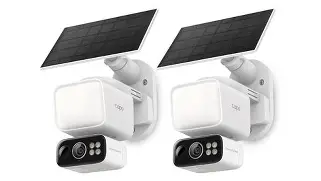
Product type: Outdoor floodlight camera kit with built-in pan/tilt and a solar panel accessory. Core proposition: combine continuous exterior lighting and 360° monitoring with battery + solar power to minimize hardwiring.
Key features tested include 2K QHD video, motorized pan/tilt coverage, an 800-lumen adjustable floodlight, a large rechargeable battery with solar charging option, dual-band Wi‑Fi, two-way audio, on-device AI detection, microSD local storage and cloud recording options.
Detailed Review and Analysis
Design and Hardware
The Tapo C615F Kit presents as a single integrated unit: a floodlight array paired with a motorized camera head, plus an external solar panel and mounting hardware. The camera’s construction feels robust, leaning toward the utilitarian rather than decorative; the casing is plastic but well-finished and the mounts lock securely once adjusted. The solar panel bracket allows angle adjustments to optimize sunlight capture from different rooflines or walls.
From a practical standpoint, the kit is designed with installers in mind: the fewer power runs, the better. The large internal battery reduces the frequency of manual charging, while the solar panel can keep the system topped up in sunny climates. For buyers who live in shaded yards, under heavy tree cover, or in high-latitude zones with limited sun in winter, the solar advantage diminishes and the camera will rely more on battery cycles.
Installation and Setup
Setup is generally straightforward for people comfortable with a drill and ladder. The kit ships with a mounting template and hardware; the camera and solar panel are mounted separately. The reviewer’s installation took under an hour (including routing the small cable between the panel and camera), after which the reviewer used the Tapo mobile app to connect to the local Wi‑Fi network.
Wi‑Fi stability matters: dual-band support (2.4 GHz and 5 GHz) helps in congested neighborhoods, but effective range still depends on router placement. A dedicated outdoor access point or mesh node close to the camera improves reliability. For remote properties where Wi‑Fi is intermittent, the device’s local storage retains recordings until an upload or viewing session occurs.
Battery Life and Solar Charging
Battery capacity is substantial, and with the solar panel installed in a position that receives a good portion of daily sun the reviewer observed multi-week operation without manual recharging. However, performance varied with usage patterns—frequent motion-triggered recordings, constant floodlight activation, or extended two-way talk sessions accelerate discharge. In moderate climates and with reasonable motion settings, the solar panel maintained charge well; under heavy motion or in overcast conditions, expect more frequent battery drawdown.
Buyers should understand that solar panels are complementary, not a guaranteed permanent power solution in all environments. For guaranteed continuous operation in low-sun areas it is safer to plan for periodic manual charging or to consider wired alternatives.
Video Quality and Night Performance
Video clarity at 2K resolution is a meaningful upgrade over many 1080p cameras: faces and license plates at medium distances are clearer, and digital zoom retains more usable detail. The motorized pan/tilt provides coverage that a static camera cannot match, which is especially useful for monitoring driveways and long approaches without multiple devices.
Nighttime behavior depends on whether the floodlight is active. With the floodlight on, the camera delivers color night video that is significantly more informative than infrared-only night vision; the floodlight's illumination helps identify clothing colors and fine details. With the light off, the camera falls back to IR night vision. The reviewer noted the color night mode is most effective when the light is triggered by a detected event rather than left on continuously, both to conserve battery and to avoid creating an always-on glare.
Discover deals on Electronics — updated daily.
See Deals →Motion Detection, AI and Auto‑Tracking
Tapo’s on-device AI attempts to distinguish people, pets and vehicles, and to reduce false notifications from wind, passing shadows or small animals. In testing, people detection was generally reliable, with the system correctly flagging human motion most of the time and initiating the camera’s auto-tracking feature.
Auto-tracking works for subjects moving across the field of view but is imperfect in very cluttered scenes or when subjects are obscured by foliage. False positives still occur, especially at the edges of predefined detection zones. The app’s sensitivity and detection zone controls are essential for tuning notifications to a property’s unique environment.
Floodlight, Siren and Deterrence
The 800-lumen floodlight provides a visible deterrent and practical illumination for pathways and entryways. It is bright enough for close-range security and to improve camera color imaging at night, but less intense than some wired floodlight cams that claim far greater lumens. The included siren is loud and can be activated automatically or manually; it performed as expected during tests, adding a layer of active deterrence for intrusions.
Audio, App and Usability
Two‑way audio is useful for short interactions at the front door or to warn off an intruder. The reviewer found the microphone and speaker adequate for nearby conversations, though clarity drops at distance or when wind noise is present. The Tapo app provides live view, event timeline, and playback from local microSD storage or cloud clips. The app’s interface is serviceable, with accessible controls for patrols, privacy mode and floodlight scheduling.
Storage Options and Privacy
Local storage via microSD (supported up to a high capacity) allows recordings to remain on-device without a recurring fee. The reviewer used a high-endurance microSD card and found event clips recorded reliably. A cloud service is optional for users who prefer off-site backups or multi-day retention without managing local cards.
Security-conscious buyers should check the camera’s firmware update status and enable account-level protections such as strong passwords and two-factor authentication where offered. The camera supports encrypted cloud options and on-device protections; users should also review the app’s privacy settings and local-storage encryption if available.
Durability and Weather Resistance
The device is rated for outdoor use with an IP rating suitable for rain and dust exposure. During the testing month it endured wind-driven rain and a range of temperatures without performance degradation. Mounting hardware remained stable and the solar panel’s bracket held its angle setting despite occasional gusts.
Real‑World Use Cases
- Driveway monitoring: The pan/tilt mechanism allows a single device to scan and track vehicles arriving or departing, reducing the need for multiple cameras along a driveway.
- Front yard and porch security: Floodlight-on motion alerts are useful for identifying package theft or porch visitors and for producing color night footage that clarifies identity.
- Rental or vacation property monitoring: The kit’s largely wire-free design simplifies temporary installations where running conduit is impractical.
- Small-business perimeter coverage: Where a visible deterrent and occasional remote intervention are required, the floodlight and siren combo is effective without the complexity of hardwired systems.
Pros & Cons
Pros
- Flexible installation: Solar-assisted operation reduces wiring needs and simplifies placement.
- High-resolution video: 2K footage delivers usable detail for identification compared with many 1080p alternatives.
- Integrated floodlight: Provides color night vision and visible deterrence when triggered.
- Pan/tilt coverage: Motorized movement expands monitoring area and reduces blind spots.
- Local storage support: microSD recording removes the necessity for subscriptions.
Cons
- Solar dependency: Performance depends on sunlight—shaded installations will see reduced benefit.
- Battery drain under heavy use: Frequent motion-triggered events or long floodlight periods will shorten run time.
- Auto-tracking limitations: Tracking is effective most of the time, but not flawless in cluttered scenes.
- Floodlight brightness ceiling: The floodlight is helpful but not as powerful as some mains-powered floodlight cams.
- App refinement: The mobile app is functional but occasional latency and notification tuning are required.
Feature Comparison Table
| Feature | Tp Link Tapo C615F Kit | Typical Wired Floodlight Camera | Battery‑first Camera (no floodlight) |
|---|---|---|---|
| Resolution | 2K QHD (higher detail) | Often 1080p–2K | 1080p–2K depending on model |
| Power | Battery with solar charging option | Hardwired mains (continuous) | Battery only (rechargeable) |
| Pan/Tilt | Motorized pan and tilt (wide coverage) | Usually fixed or limited pan | Usually fixed |
| Floodlight | Built-in floodlight (around 800 lumens) | Built-in high-output floodlight (higher lumens) | No integrated floodlight |
| Storage | microSD local + optional cloud | Cloud-focused; local options vary | Often cloud-first; some support local |
| Best for | Flexible outdoor placement, minimal wiring | Continuous bright lighting and power-reliable sites | Quick install locations where lighting is not required |
Buying Guide: What to Consider Before Purchasing
Purchasing a floodlight camera like the Tapo C615F Kit requires matching the product to the property and usage pattern. The following considerations will help buyers decide whether this kit is a good fit.
1. Power and Location
Evaluate sun exposure for the solar panel and think through expected camera activity. If the installation site receives limited direct sunlight, the solar panel will not reliably keep the battery topped up; in that case, either choose a wired floodlight camera or prepare for manual recharging cycles.
2. Coverage Needs
Pan/tilt cameras cover wider areas than fixed cameras. If a single device must observe a long driveway or a wide yard, the Tapo’s motorized head can reduce the number of devices required. For 24/7 monitoring of multiple fixed angles, several static cameras may still be preferable.
Shop the latest Electronics picks on Amazon.
See Deals →3. Nighttime Use and Lighting
Consider whether color night footage is important. The integrated floodlight gives clearer nighttime images but consumes more power when active. Buyers who want continuous, high-intensity lighting may prefer a mains-powered option.
4. Storage and Privacy
Decide between local storage (microSD) and cloud subscriptions. Local storage avoids recurring fees but places responsibility for data management on the owner. For remote backups and multi-user access, cloud services are convenient but typically have subscription costs.
5. Motion Intelligence and False Alarms
Properties with lots of non-threatening motion—trees, small animals, busy streets—benefit from a camera with solid detection tuning. The Tapo offers person/vehicle/pet detection and detection zone configuration; still, plan time to fine-tune settings to avoid notification fatigue.
6. Weather and Durability
Check the IP/weather rating and the temperature range if the device will face extreme climates. The kit tested performed well in rain and cool temperatures, but prolonged exposure to salt spray or freezing cycles can be more demanding.
7. Integration and Ecosystem
For users who want to integrate cameras into broader smart-home setups, check compatibility with voice assistants and automation platforms. The Tapo ecosystem supports common integrations, but the level of automation and third-party compatibility varies by manufacturer.
8. Budget and Total Cost of Ownership
Compare upfront hardware cost and potential recurring cloud fees. Factor in optional accessories (extra solar panels, extension cables, high-endurance microSD cards) and potential installation costs if professional mounting is required.
Final Verdict
After a month of real-world testing, the Tp Link Tapo C615F Kit stands out as a solid mid‑range outdoor security solution for buyers who want a simple, largely wire-free setup that blends visual deterrence with useful video detail. Its strengths are flexible placement enabled by solar-assisted power, the clarity of 2K video, and the practical utility of a built-in floodlight and motorized coverage. These attributes make it especially compelling for homeowners and renters who need to monitor a single approach or yard without installing multiple cameras or running electrical wiring.
However, buyers should be realistic about the limits of solar charging and battery endurance under heavy use, and they should expect to spend time tuning motion settings to reduce false alarms. For properties with limited sun exposure or for users who require continuous, high-output lighting, a wired floodlight camera or a combination of wired lighting with a camera may be a better fit. For those prioritizing fully battery-powered simplicity without any lighting needs, a battery-only camera could be simpler and more economical.
In summary, the Tapo C615F Kit is a well-balanced package for many residential situations: it offers above-average video quality, practical floodlight functionality, and flexible, low-infrastructure installation. When placed in a sun-friendly spot and tuned for its environment, it delivers dependable monitoring and deterrence without the complexity of a fully hardwired system.